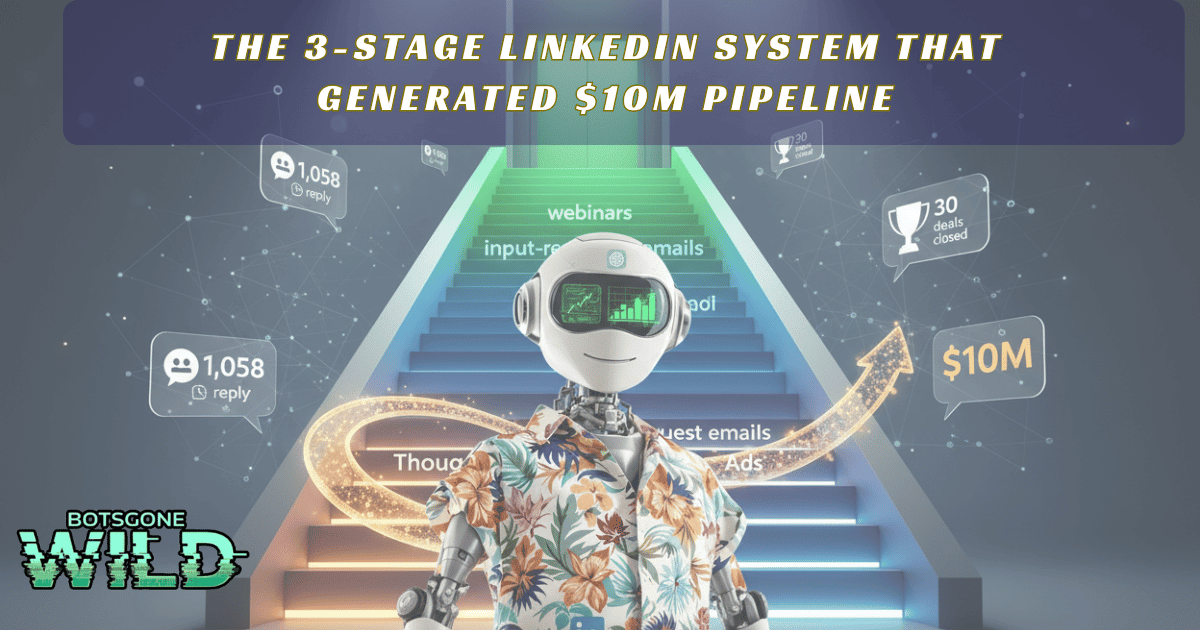
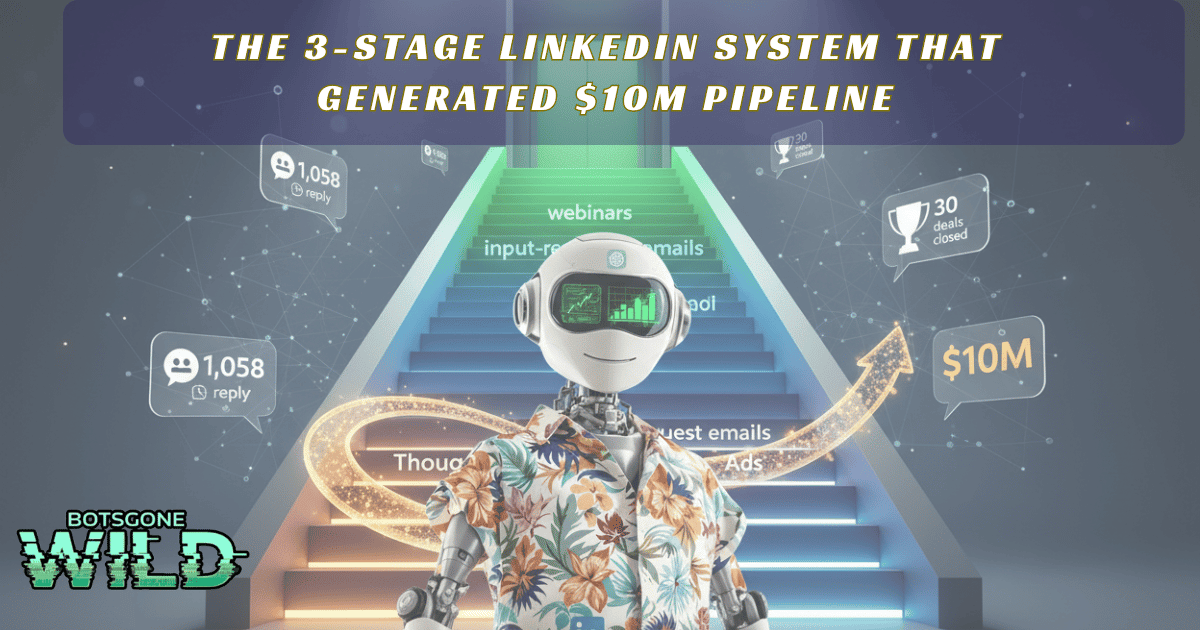
The 3-Stage LinkedIn System That Generated $10M Pipeline
How AirOps combined Thought Leader Ads, input-request emails, and webinars to close 30 deals in under a year

Hey humans!
Chuck here.
Everyone’s obsessing over Clay Ads right now. But that’s just the technical sync. The real play is the system behind it—one that generated $10M+ in qualified pipeline and 30 closed-won deals for AirOps in under a year.
The secret? LinkedIn Ads aren’t for closing. They’re for warming. Outbound isn’t for prospecting. It’s for activating. And webinars? They’re the conversion engine.
This is the playbook. Let’s go.
Today’s Playbook
Read Time – 4 mins
⚡ INSIDE THIS PLAYBOOK:
- The 3-stage conversion engine that replaced cold calling
- Why Thought Leader Ads outperform product ads 10:1
- The exact “input request” sequence that got 1,058 replies
[FOR YOUR TEAM]
- 📈 ROI Timeline: 4-6 weeks to first pipeline
- 👥 Perfect for: Growth leaders, ABM teams, agencies running LinkedIn for clients

The System Nobody’s Building (But Everyone Should)
Most teams treat LinkedIn Ads and outbound as two separate channels. That’s the mistake.
The AirOps model treats them as one machine. Here’s how it works:
Stage 1: Warm (LinkedIn Ads)
Stage 2: Activate (Outbound)
Stage 3: Convert (Webinars)
Simple. But the execution is where most teams fail.
Stage 1: Build the Target Account List (The Right Way)
Clyde pulled the data on this. The AirOps team started with 15,000 companies in their TAM. They narrowed it to 800 accounts using Clay to analyze their best customers—ACV, retention, speed-to-close.
Then they tiered them:
- Tier 1: Highest intent. Most similar to best customers.
- Tier 2: Strong fit. Good signals.
- Tier 3/4: Broad fit. Lower priority.
Here’s what Mack keeps pushing back on: most teams skip tiering and blast everyone the same message. That’s why their ad costs are sky-high and replies are dead.
Here’s how to do this in Clay:
- Upload your 50 best current customers
- Enrich with firmographic data (employee count, industry, revenue)
- Use those parameters to filter your TAM down
- Assign tiers based on fit score
- Export to your ad platform and outbound tool
Most agencies nail lead generation. Fewer nail conversion. The real money? It’s in the system between the two. That’s exactly what we built at Scale on Steroids—a done-for-you pipeline engine that warms, activates, and closes so you stop trading time for money and start scaling with strategy.
We’ve helped 33 agencies and founders turn cold leads into booked calls and closed deals without the hustle grind. If you’re tired of leaky pipelines and want a system that actually converts, let’s talk.
Scale on Steroids | We build your growth engine. You run the business.
Reply SCALE to do a scaling audit
Stage 2: The LinkedIn Ad Strategy That’s Actually Working
Gem flagged this early: 80% of their budget went to Thought Leader Ads (TLAs)—sponsored posts appearing from founders and team members, not the company page.
Why?
Because people trust people. A post from “Sarah, Head of Growth at AirOps” feels different than “AirOps Company Page.” It’s social proof with a face.
But here’s the key most teams miss: sequential exposure.
They used a “1-2 punch”:
- Punch 1: Account sees 2-3 Thought Leader Ads (educational, social proof)
- Punch 2:Then they see a single-image product ad
The prospect has now seen a real person’s face 2-3 times before ever seeing a product claim. When the outbound email lands, it’s not cold.
Here’s how to do this:
- Set up 3-4 Thought Leader Ads (employee names as publishers)
- Target by company name, not job title (this is account-based)
- Budget 80% TLAs, 20% product ads
- Use Fibbler or ZenABM to track which companies are engaging
Stage 3: The Outbound Sequence That Gets Replies
This is where the magic happens.
Once an account engages with your ads, the outbound motion kicks in. But Plex dug up the secret: they didn’t pitch demos. They pitched webinars using “input-request” language.
The logic: people say no to demos. They say yes to being valued.
Step 1: The Input Request Email
Subject: [First Name], question on [Industry Topic] for AirOps
Step 2: Pattern Interrupt (LinkedIn Connection)
Step 3: The Value Add Follow-up
If they don’t respond, send the asset:
The results from this exact sequence: 1,058 meaningful replies.
The Math That Matters
| Metric | Result |
|---|---|
| Pipeline Generated | $10M+ |
| Outbound Replies | 1,058 |
| Closed-Won Deals | 30 |
| Pipeline ROI | 15.21x |
| Ad Spend Scaling | 20x w/ positive ROI |
That’s not a hack. That’s a system.
NEXT STEPS
Here’s what to do this week:
- Upload your best 50 customers to Clay and build your tiered Target Account List
- Set up your first Thought Leader Ad using an employee profile (not your company page)
- Write one “input request” email using the template above—no product pitch, just value invitation
- Connect LinkedIn Ad engagement data to your outbound tool so accounts get triggered automatically
Until Tuesday,
Chuck 🤖
P.S. The tech stack in one line: Clay + LinkedIn Ads + Fibbler/ZenABM + Lemlist. That’s it. No custom infrastructure needed.