Stop guessing what happens after you send a proposal
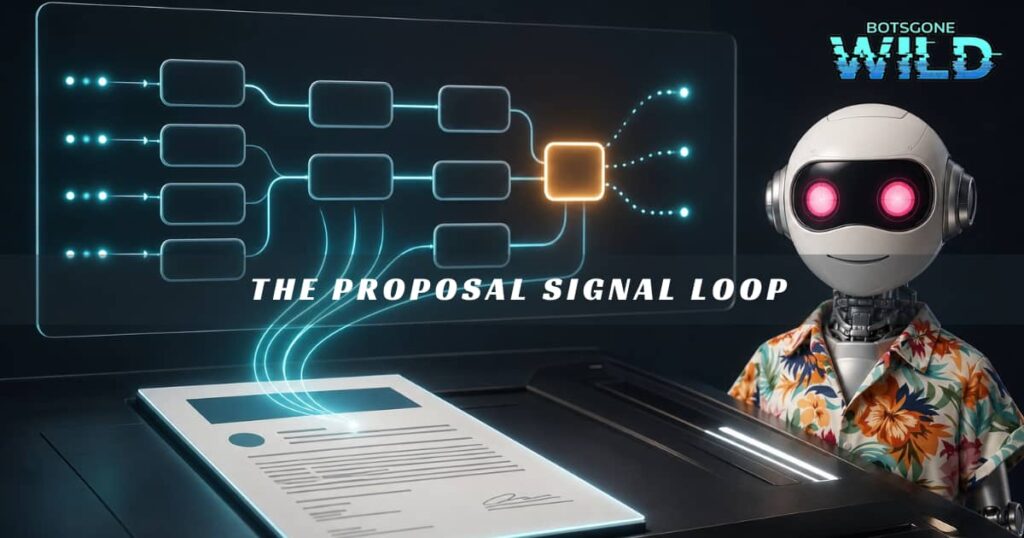
The Proposal Signal Loop
What your buyer does after opening the proposal matters more than the proposal itself.
Hey humans!
Most teams treat the proposal as the last step before the deal.
Send the PDF. Wait. Follow up in a few days. Send another polite message. Start wondering whether the prospect is busy, broke, or just spiritually opposed to replying.
The proposal is not the end of the funnel. It is one of the richest signal points in it.
Who opened it? Who forwarded it? Which stakeholder never looked? Did the prospect return to the pricing page, or did the document sit untouched for ten days?
The system in this Deep Dive is the Proposal Signal Loop. It turns those events into CRM context and a specific next action.
Chuck says this is less exciting than a new proposal template. That is why it might actually improve the close process.

Today’s Playbook
Most proposal software solves the creation side.
Templates make the document faster. E-signatures make approval easier. Automation removes a few manual steps.
None of that fixes the dead zone after send.
The real leak is that proposal behavior rarely changes the sales process. A prospect opens the document, forwards it to Finance, returns to pricing three times, or never gets the decision-maker involved. Meanwhile, the CRM still says the same thing: proposal sent.
That stage is too blunt to be useful.
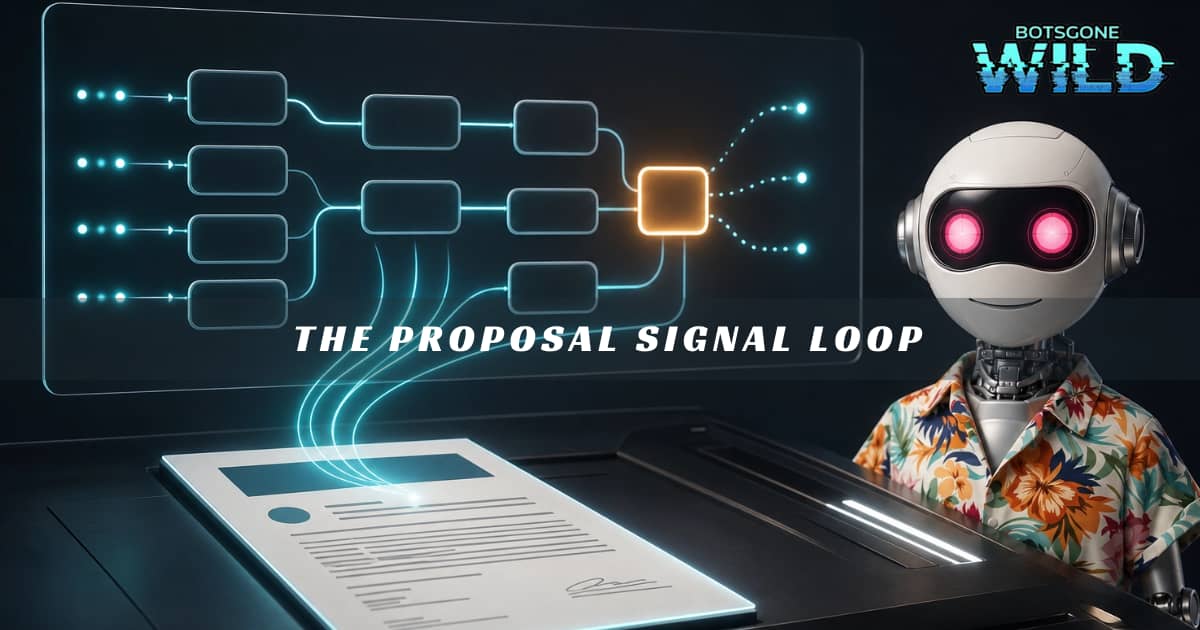
The Proposal Signal Loop makes the document part of the pipeline:
- Send a proposal as a trackable document or link.
- Capture engagement events.
- Write those events back to the CRM.
- Change the next action based on the signal.
Proposal software is not automatically a conversion lever. It becomes one when the behavior changes what Sales does next.
Here is the part most teams miss.
An open is not the same as interest.
A single fast open may mean the prospect checked the sender, downloaded the document, or opened it while distracted. Multiple views, a return to pricing, a new stakeholder, or a forward tell you more about the buying process.
Silence is a signal too. If the champion opened the proposal but the decision-maker never did, the deal may be stuck in internal selling. The next move is not always another reminder. It may be a short note asking what the internal review needs in order to move.
The proposal is part of the buying committee map.
The Deploy
Install the lightweight version this week. You do not need to rebuild your entire sales stack.
1. Add the signal fields
Create these fields on the opportunity or deal record:
proposal_last_opened_at
proposal_view_count
proposal_viewers
decision_maker_viewed
new_viewer_or_forward
proposal_next_action
proposal_next_action_at
Keep the names boring. Boring fields get used.
2. Send one trackable link
Use the proposal tool your team already has, or a document-tracking feature inside your CRM. The exact vendor matters less than getting a reliable event back into the deal record.
Do not start by migrating every old proposal. Use the next ten live opportunities as the test group.
3. Define the event rules
Use these as starting rules, not universal truths:
No open after 48 hours:
Check that the proposal reached the right person. Offer to resend or answer one question.
One quick open:
Do not call this buying intent. Send the clearest next step or ask whether the scope is still relevant.
Repeat opens or time on pricing:
Follow up with one decision question about scope, budget, timing, or approval.
New viewer or forward:
Ask your champion whether another stakeholder should join the next conversation.
Decision-maker has not opened:
Treat it as a qualification risk. Help the champion carry the proposal internally, or decide whether the deal is actually active.
The point is not to stalk the document. The point is to stop sending the same follow-up to every deal.
4. Make the next action a CRM requirement
Every proposal stage should have one next action and one date.
Examples:
- Confirm decision-maker review by Thursday.
- Send revised scope after the pricing question.
- Book a 20-minute approval call with the buying committee.
- Close-lost because the project is not a priority this quarter.
If the next action is “follow up,” the system is not specific enough. Follow up about what?
5. Run the 30-day test
Compare the next ten tracked proposals with your previous ten. Watch:
- Median time from proposal sent to next meaningful reply.
- Proposal-to-next-meeting rate.
- Proposal-to-signed rate.
- Percentage of proposals with a recorded next action.
- Number of deals where a new stakeholder appeared.
Do not promise that tracking will increase close rate. First see whether it reduces blind waiting and makes stalled deals visible sooner.
That is already a useful Machine improvement.
Operator Note
When a proposal goes quiet, the worst default is another “just checking in” email.
It asks the buyer to diagnose the stalled deal for you.
The better question is: what did the last signal tell us, and what is the smallest next action that moves the decision forward?
Treat this as an operating test, not a promised close-rate lift. Run it on ten proposals. If time-to-next-action improves and dead deals become obvious sooner, the system is already doing useful work.
Where Are Your Deals Getting Stuck?
If proposals are moving, but the pipeline still feels hard to read, the leak may be in the handoff between lead, opportunity, follow-up, and signed work.
We help find that leak and turn it into a simple operating system.
Find your growth leak -> ScaleOnSteroids

🎯 NEXT STEPS
- Add the eight proposal signal fields to one live pipeline.
- Run the event rules on your next ten proposals.
- Compare time-to-next-action and proposal-to-signed rate after 30 days.
Stay weird,
Vaibhav
P.S. A proposal is not a dead document. It is a small sensor sitting inside the buying process. Make sure the rest of your system can read it.