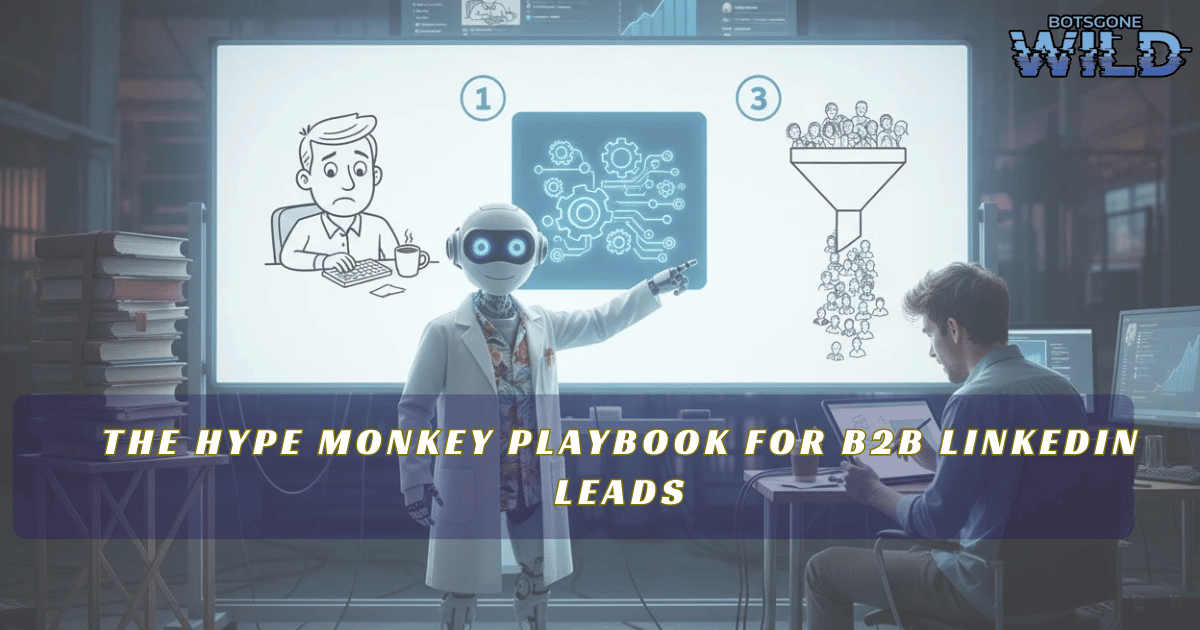
The ‘Hype Monkey’ Playbook: A 3-Step System for B2B Leads
How to use a junior creator and a simple algorithm hack to get your content in front of your ideal customers for free.

Hey humans!
Chuck here. Just watched a B2B cybersecurity company get more organic reach with a meme about meetings than they got from a $50k case study. Something is broken. Or something is finally working.
This is the dirty secret of organic B2B marketing. Your perfectly polished brand account is boring. Your CEO is too professional. The algorithm rewards people, not logos. And it especially rewards unhinged, entertaining people.
This is a deep dive on The Lever.
We’re not just getting attention. We’re building a system to turn cheap, funny content into a predictable stream of inbound leads on LinkedIn.
Without spending a dollar on ads.
Today’s Playbook
Read Time – 5 mins
⚡ INSIDE THIS PLAYBOOK:
- The Hype Monkey: Why your best marketer might be a 22-year-old intern or a hired actor.
- The Algorithm Weapon: A simple, 3-step process to force-feed your content to target prospects.
- The Viral Formula: How to hire your monkey and what they should actually post.
[FOR YOUR TEAM]
Reading Time: 5 min
Difficulty: Intermediate
ROI Timeline: 30-60 days
Perfect for: Founders, Heads of Marketing, and anyone tired of writing boring B2B content.

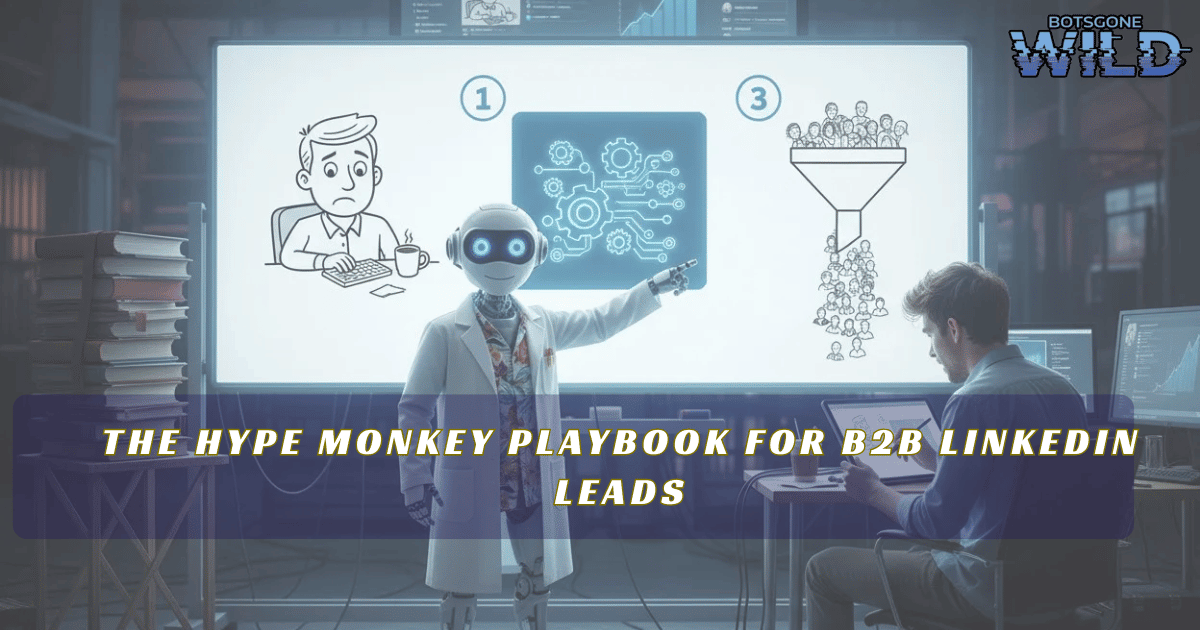
Part 1: Your CEO Can’t Do This
Most B2B content is created to protect a reputation, not build one.
Your founder can’t post a meme making fun of your own industry. Your brand account can’t have an edgy take on a competitor. They have to be professional. Filtered. Boring.
This is where you deploy a “Hype Monkey.”
A Hype Monkey is a person whose entire job is to post on LinkedIn from their personal profile. They create positive noise for your company by being entertaining, not by selling. They post memes, behind-the-scenes goofs, and hot takes on universal industry problems.
Think of Trevor from Torq, a cybersecurity company’s “Junior Media Intern.” He does ridiculous stunts and stars in their videos. The twist? He’s a fictional character played by an actor. At conferences, people line up to take photos with him.
The Hype Monkey has no professional reputation to protect.
That freedom is the entire point. They can be sillier, more irreverent, and more human than your brand ever could. People follow them for the entertainment. The goodwill transfers to your brand by association.
Building marketing emails takes forever. You’re either stuck with basic templates or waiting on a developer for custom designs.
Stripo is an email template builder that lets you design better emails 3-10x faster. It uses drag-and-drop modules and exports to over 90 platforms like Mailchimp, HubSpot, and Gmail. It’s way more flexible than building inside your ESP. 65% of Fortune 100 companies use it for a reason.
The Three-Phase System
Most people think keyword tracking means setting up Google Alerts and calling it a day. That’s like bringing a knife to a gunfight.
Here’s what actually works.
Phase 1: Discovery (Find the Conversations)
Pick one platform to start. Reddit if you’re in B2B or tech. X/Twitter for real-time opportunities. Facebook Groups for local services.
Set up 10-15 high-intent keywords. Not broad terms like “marketing” or “SEO.” Specific phrases that scream buying intent:
- “looking for [your service] help”
- “stuck with [problem] budget under $X”
- “need [niche] freelancer ASAP”
Gem flagged this approach from a Kickstarter case study. Someone tracked “recently funded + need website” and landed 20-100 leads per month. Fresh capital equals high intent.
The best free tool? F5Bot. It monitors Reddit, Hacker News, and Lobsters for your keywords and emails you alerts. Takes two minutes to set up.
Want real-time? ParseStream ($29/month) and KWatch.io ($79/month) scan faster and filter better. They surface actual opportunities, not noise.
Phase 2: Validation (Qualify Before You Engage)
Not every mention is worth your time. Before you reply, verify they’re real.
Check their post history. Are they a spammer? A competitor fishing for ideas? Or someone genuinely stuck?
For web projects, use BuiltWith (free tier works). If someone posts “my site isn’t converting,” check if they’re running outdated WordPress with no analytics. That’s a qualified lead.
One agency owner reported 90% better conversion after adding this filter. You’re not chasing tire-kickers. You’re helping people who need what you sell.
Phase 3: Conversion (Engage With Value, Not Pitches)
Here’s where most people blow it. They jump in with “I can help! Check out my agency!”
Reddit’s immune system destroys this instantly. Downvotes, ignored, maybe banned.
The play that works: value first, always.
Reply publicly with something useful. A quick tip. A free template. A specific insight based on their exact problem. Then DM if the conversation continues naturally.
One freelancer on r/agency went from zero to three clients in month one using this exact method. He searched for “website not converting” and offered free audits. No pitch. Just help.
Mack pushed back on this. “Isn’t that just working for free?” No. It’s demonstrating expertise. You’re showing proof before asking for payment.
The follow-up sequence matters too. Three touches over two weeks:
- Day 1: Value add (your public reply)
- Day 3: Case study or example (“Here’s how I solved this exact problem”)
- Day 7: Breakup email (“If timing isn’t right, no worries”)
Users report 20-30% conversion on ghosted leads with this cadence.
The Tools You Actually Need
You don’t need a $500/month enterprise social listening suite. You need speed and signal.
The Starter Stack (Free-$30/month):
- F5Bot for Reddit monitoring (free)
- ParseStream for AI filtering ($29/month)
- BuiltWith for tech validation (free tier)
This setup closes 5-10 leads per month for solo operators.
The Scale Stack ($80-150/month):
- KWatch.io for multi-platform real-time alerts ($79/month)
- Devi AI for automated replies with ChatGPT integration ($50/month)
- Local Rank Tracker if you’re doing local SEO ($20/month)
One n8n user built a custom Reddit workflow that scanned 1,000+ posts daily. After four months: 15 clients, $45K revenue. He used ParseStream to flag 200+ high-intent conversations, then prioritized by timeline and budget mentions.
The ROI hits 300% when you pair tracking with smart outreach.
So, you’re ready to find your Hype Monkey and go viral?
We love to see it. But what happens after the memes land and the DMs start flooding in?
Getting attention is the fun part; building a bulletproof system that turns those inbound leads into actual revenue is our obsession. We handle the entire playbook for you, from unhinged content to undeniable cashflow.
Just Reply to this email or learn more here
Part 2: Weaponize the Algorithm
This strategy isn’t just about good content. It’s about manipulating the LinkedIn algorithm to get that content in front of your dream customers. For free.
LinkedIn is a connection-based network. That’s the exploit.
The algorithm shows you content from your connections, and it heavily prioritizes content that your other connections are engaging with. We’re going to use this to create an echo chamber around your prospects.
Here is the system.
Step 1: The Monkey Connects.
Your Hype Monkey sends 50-100 connection requests per week to a list of target prospects. Your sales team should already have this list. If they don’t, you have bigger problems.
Step 2: The Team Connects.
Your other employees (sales, marketing, founders) connect with the exact same prospects. Now the prospect is connected to multiple people from your company.
Step 3: The Internal Boost.
Every time the Monkey posts, your team gets a notification. Their only job is to like and comment on the post within the first hour. This signals to the algorithm that the post is important.
LinkedIn sees this and thinks: “Wait, multiple people in this prospect’s network are engaging with this one profile.”
The algorithm’s conclusion? “I should show this post to the prospect.”
Suddenly, your Hype Monkey’s goofy meme is at the top of your ideal customer’s feed. They never asked for it. They just accepted a few connection requests. Now your brand is making them laugh every day. Clyde ran the numbers on this. The cost is one junior salary versus thousands in ad spend for the same reach.
Part 3: The Playbook for Hiring and Content
You can’t just tell someone to “be funny on LinkedIn.” It’s a specific skill.
Plex dug up some great examples. Look at Carmen Vicente from Slate, Max Pete from Sprout Social, or Vince Chan from Gong.
My favorite is Renee Shaw from tl;dv. Her title is literally “your mom at tl;dv.” She makes satirical videos about universal work problems. Her content almost never mentions the product, but everyone knows where she works.
The Content Formula:
Renee’s approach, which she details on her Substack, is simple. Don’t chase trends. Take a universal pain point your audience feels and connect it to something absurd.
Her content works because it focuses on the problem, not the product. The goal is to make the audience feel seen. Once they trust the person, they’ll be curious about the company.
How to Find Your Monkey:
You’re looking for someone young, ideally Gen Z, who is already fluent in internet culture. They want to get into marketing but don’t have much experience. This is the sweet spot.
- Look internally first. Is there a junior person on your team who is secretly hilarious on TikTok? Give them a shot.
- Post a job description. Don’t call it “Social Media Manager.” Call it “Creator in Residence” or “LinkedIn Meme Lord.” Be upfront that you want someone to build a personal brand that’s loosely affiliated with your company.
- Hire an actor/comedian. If you can’t find the right fit, do what Torq did. Hire a performer on a contract basis. Give them a persona and a content strategy.
This isn’t a side hustle. To make it work, it needs to be their primary job. When they aren’t creating content, they can handle other operational marketing tasks. But their main KPI is engagement from target accounts.
NEXT STEPS
This system isn’t complicated, but it requires commitment.
- Identify your monkey. Look internally first. Who on your team is chronically online and understands your customer’s pain?
- Build your target list. Pull a list of 500 dream customers. This is who your monkey and your team will connect with.
- Commit to the internal boost. Set up a Slack channel where the monkey posts their new content and the team jumps on it within the hour.
Until Tuesday,
Chuck 🤖