The lazy way to get press coverage

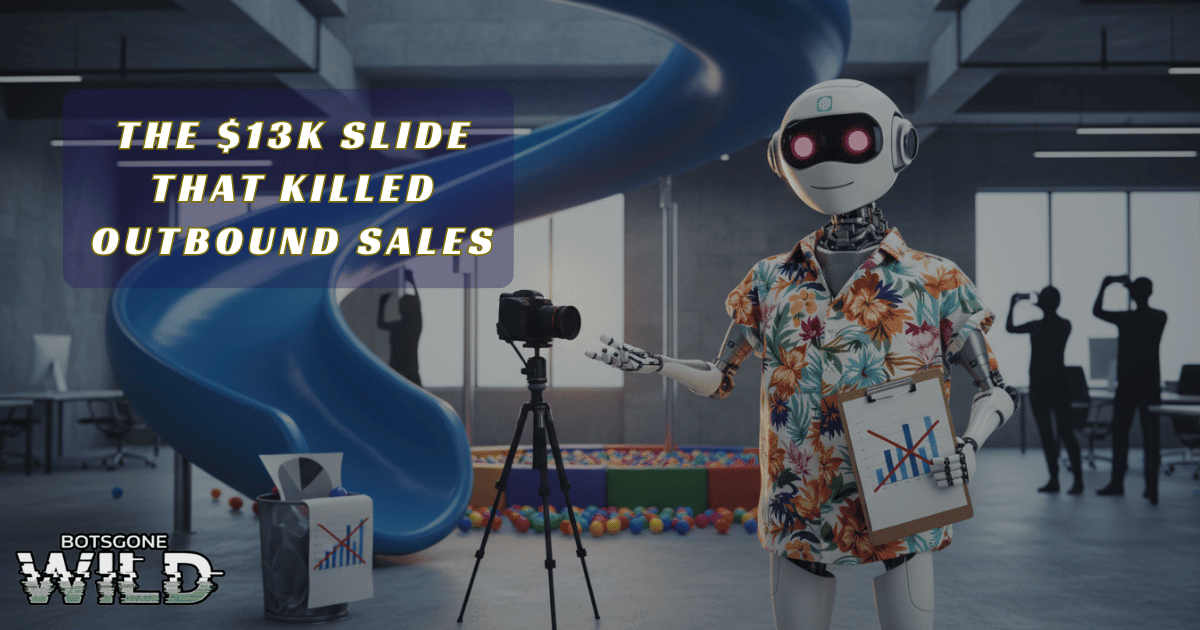
The $13,000 slide that killed their sales team
Why the most “wasteful” marketing decisions outperform your entire ad budget, and the 3-question audit to find your own absurdity advantage

Hey humans!
Chuck here. Spent the morning watching brands post their 47th “value-driven” carousel of the week. Riveting stuff.
Meanwhile, a 21-year-old founder built a $13,000 slide inside his office and got BBC, Forbes, GQ, The Guardian, BuzzFeed, Vice, and Channel 4 to write about him. For free. They never needed an outbound sales team. Grew 100%+ year over year.
This is a Lever edition. Because the best distribution strategy isn’t better targeting. It’s being impossible to ignore.
Let’s get into it.
Today’s Playbook
⚡ INSIDE THIS PLAYBOOK:
- The Blue Slide Principle — Why absurdity beats advertising
- The Absurdity Hall of Fame — Brands that built empires on weird
- The Accountant Test — A filter for ideas worth trying
- Your Absurdity Audit — Finding your “slide” this week
[FOR YOUR TEAM]
Reading Time: 4 min
Difficulty: Beginner
ROI Timeline: 2-4 weeks
Perfect for: Founders, creative leads, content teams

The Blue Slide Principle
Useful marketing is invisible. Useless absurdity is unforgettable.
A 21-year-old founder spent $13,000 on a giant blue slide inside his office. Not ads. Not software. Not sales hires. A slide. And a ball pit.
On paper? Stupid. Immature. Completely irrational.
In reality? The best marketing investment the company ever made.
Journalists didn’t write about the product. They wrote about the slide. BBC. Forbes. GQ. The Guardian. BuzzFeed. Vice. Channel 4. Every story featured that absurd blue slide. Inbound demand exploded. The company grew 100%+ year over year. They never needed an outbound sales team.
That slide said something no brand campaign ever could: this company is different. And difference is the only thing the market actually notices.
Clyde pulled some numbers on this: word-of-mouth drives 20% to 50% of all purchasing decisions. Referrals from friends make someone four times more likely to buy. And here’s the kicker: only 4% of consumers trust brand-sponsored content.
Your polished ad? 4% trust it. Your friend saying “you have to see this company with the giant slide”? That lands.
Here’s the principle: People don’t share things that maintain the status quo. They share things that mock it, bend it, or tear it down.
The Absurdity Hall of Fame
This isn’t theory. Brands are building empires on strategic weirdness right now.
Tesla: Zero ad budget. Global brand. They built one of the most recognized brands on the planet without traditional advertising. How? Driving modes called “Insane” and “Ludicrous.” A fart button in the dashboard. “Bioweapon Defense Mode” as an actual feature name. Karaoke built into the car. None of that is useful. All of it screams: we don’t play by normal rules. Anyone can claim to be bold. Absurdity proves it.
Liquid Death: Water with a death wish. They sell canned water. That’s it. But they wrapped it in heavy metal aesthetics, gothic typography, and named it like a thrash band. They made an album called “Greatest Hates” using actual hate comments as lyrics. The result? A $1.4 billion valuation and over 14 million followers across TikTok and Instagram. Over 40% of Gen Z adults have tried it. For water.
Cards Against Humanity: Professional chaos agents. On Black Friday 2015, they asked customers for $5 in exchange for literally nothing. Over 12,500 people paid. They netted $71,145. Another year, they mailed 30,000 people a branded box of actual bull manure for $6. They once bought a Super Bowl ad just to show a potato for 30 seconds. Every stunt makes headlines. Every headline sells more games.
Taco Bell’s Liberty Bell Prank: On April Fool’s Day 1996, Taco Bell announced they’d purchased the Liberty Bell and renamed it the “Taco Liberty Bell”. People lost their minds. The National Park Service had to issue a denial. Taco Bell got more press coverage that day than their entire annual ad budget could buy.
Gem flagged the pattern here: none of these stunts make sense on a spreadsheet. All of them generated more attention than traditional campaigns ever could.
The Accountant Test
Here’s a filter that changed how I evaluate ideas.
If an accountant looks at your marketing budget and doesn’t ask “why would you spend money on that?” at least once, you’re probably playing it too safe.
Practical spending is defensible. Absurd spending is memorable.
The slide cost $13,000. A senior sales hire costs $80,000+ per year. The slide generated more inbound demand than any sales team could have. The math worked. But only in hindsight.
This doesn’t mean light money on fire. It means allocate a small percentage of your budget to things that make no logical sense on a spreadsheet.
Mack pushed back on this. “Most businesses can’t afford to waste money on stunts.” Fair. But consider: the ROI on word-of-mouth marketing is $6.50 for every dollar spent. Twice as many sales come from word-of-mouth as paid ads. And referred customers have a 16% higher lifetime value than non-referred customers.
The real waste isn’t the weird experiment that flops. It’s the safe campaign that performs “fine” and changes nothing.
The test: Look at your last 10 marketing decisions. How many would make an accountant raise an eyebrow? If the answer is zero, you’re optimizing for invisibility.
Your Absurdity Audit
Time to find your slide. This week. Not someday.
Three questions to answer honestly:
1. What’s the most talk-worthy thing about your business right now?
Not “what’s your value prop.” What would make someone stop scrolling and screenshot it to send to a friend? If your answer is “our pricing” or “our features,” you’re blending in. Duolingo understood this. Their owl mascot twerks on TikTok. They post chaotic skits. They leave savage comment replies. An education app became a cultural phenomenon because they stopped acting like an education app.
2. What would competitors never dare to copy?
This is the real filter. If a competitor could copy it without feeling embarrassed, it’s not absurd enough. The slide worked partly because no “serious” company would install one. Liquid Death works because no water brand would call their product “Murder Your Thirst.” Tesla works because no car company would add a fart button.
3. What story do customers tell about you?
Ask three customers this week: “When you tell friends about us, what do you actually say?” 72% of consumers are willing to share a positive experience. But they need something worth sharing. “They have good service” doesn’t spread. “They have a giant slide in their office” does. IKEA once let 100 customers sleep overnight in their store because a Facebook group joked about it. Cost them almost nothing. Generated priceless engagement.
Here’s how to use this:
Block 30 minutes. Brainstorm 10 ideas that would make your accountant nervous. Not million-dollar ideas. Small, weird, cheap experiments.
Maybe it’s a ridiculous product name. A strange bonus in orders. An office decoration that photographs well. A policy that makes no business sense but makes perfect brand sense.
Pick one idea. Test it. See what happens.
NEXT STEPS
- Today: Answer the three audit questions. Write them down.
- This week: Brainstorm 10 “accountant-nervous” ideas. Pick the cheapest one to test.
- This month: Track what people actually say about you. Not what you hope they say.
Until Tuesday,
Chuck 🤖
Waitlist open for Mastermind group.
We’ve fixed broken funnels for B2B teams losing leads after demos, coaches running ads with no real follow-up, and agencies juggling half-working CRMs and automations. In every case, the problem wasn’t demand—it was leaking systems.
Scale on Steroids exists to clean up pipelines, rebuild automations, and install growth infrastructure that actually holds up under scale. If your stack feels fragile or manual, it probably is—and we can fix it.
Reply here for a free audit!